




hamshambstudent developer / india / coding since 2021

probably building something

hamshamb: i build things i wish existed.

software, tools and experiments built from curiosity, irritation, or both.

privacy tools, weird utilities, games, networking experiments and whatever else becomes impossible to ignore once i start thinking about it.

currently

building
Rivet
experimenting
MX
learning
security / OSINT
away from code
speedcubing

latest release

Nexus

"send them a code and let them join my world" turned out to be a networking project.

lab

elsewhere

in the lab.

the unfinished things are usually the most interesting ones.current experiments, protocol work and projects that are still earning the right to be called finished.

in progressversion 1 · pre-release

BLE MESH · PRIVATE MESSAGING · MOBILE

Rivet

no account. no phone number. no server. nearby phones carry the messages.

there is no routing table. every unexpired envelope moves through the mesh, which spends bandwidth and battery to avoid keeping a convenient map of who talks to whom.

still openversion 1 is not released. the automated suite is green and the protocol is frozen for this version, but physical-phone field testing has not been completed and Rivet has not had an independent security review.

see how it works

experimentin progress

PRIVATE MESSAGING · MLS · RUST / WASM

MX

a private messenger where the cryptography is part of the build, not somebody else's service.

MX is an experimental private messenger with no phone number, no email and no account.

the cryptographic path is intentionally narrow: a Rust crate wraps OpenMLS, compiles to WebAssembly and is loaded through TypeScript bindings.

the release build compiles the crypto module from source. if the artifact is missing, the application fails loudly instead of quietly starting without encryption.

changing a button should not require recompiling Rust, so development can use a verified existing WASM artifact while release builds rebuild the crypto path from source.

TypeScript · Rust · WebAssembly · OpenMLS · RFC 9420 · pnpm

source not public yet

more things.

smaller builds, experiments and repositories that never needed a full cinematic case study.

  • PRIVACY · WEB · LIVE

    TinyPaste

    a pastebin that tries very hard to know as little as possible.

    share code, text and formatted documents without accounts, tracking or a public feed.

    pastes can expire, burn after reading, use passwords or be encrypted in the browser before the server ever sees the content.

    sometimes the best database feature is "please delete this later."

  • activeLOCAL FIRST · WRITING · PWA / WINDOWS

    Inkline

    a writing app where "save" mostly means "keep it on my machine."

    a local-first editor for rich text, markdown and plain text with no account, backend, analytics or cloud requirement.

    the web version works as an offline-capable PWA and the Windows build uses Tauri. both share the same React and TypeScript application.

    because opening a blank document should not start a relationship with a server.

    TypeScript · React · Tiptap · CodeMirror · Tauri

forks / things i’ve explored.

repositories i forked to inspect, experiment with or learn from. original authorship belongs upstream.

five years of learning by building.

some projects followed me through years of rewrites. Nexus and StudyFilter are much newer and moved far faster.

development history and public release history are shown separately.

  • development begins
  • early development
  • prototype
  • rewrite
  • hardening
  • public release
  • in development
  • pre-release
  1. 2021

    first real builds

    1. development begins

      PyForge

      PyForge begins as a small Python packaging experiment.

      what started as scripts for turning Python programs into something easier to share slowly became a proper desktop tool.

    • Python utilities
    • early desktop UI
    • packaging experiments
    • first projects that lasted longer than a weekend
  2. 2022

    projects stopped being weekend files

    1. early development

      Rivet

      the original question was simple: can two nearby phones communicate privately without relying on normal infrastructure?

      that question eventually became Bluetooth discovery, encrypted envelopes, store-and-forward delivery and mesh networking.

    2. early development

      Inkline

      i wanted a writing tool that did not need an account, backend or cloud just to save a document.

      the early versions were much smaller, but the local-first idea stayed.

    • more JavaScript
    • more interfaces
    • more things i did not finish
  3. 2023

    more systems, less one-off code

    1. prototype

      AreUHuman

      started as a touchscreen interaction experiment and gradually turned into a measurable challenge system with dozens of mechanics.

    2. early development: early build

      CHC Review Studio

      the first idea was much smaller: keep comments tied to the evidence that caused them.

      it eventually expanded into rubrics, findings, source anchors, grading and recovery.

    this was also when i started caring much more about

    • state
    • persistence
    • testing
    • failure cases
    • interfaces other people could understand
  4. 2024

    the projects get deeper

    1. development begins: development

      TinyPaste

      the question was: how little does a paste-sharing service actually need to know?

      that led into expiry, burn-after-reading, browser encryption and ownership without accounts.

    2. prototype: experiment

      MX

      started as a messaging and cryptography experiment.

      the interesting part became less about chat UI and more about how the crypto engine is built, isolated and verified.

    3. rewrite

      older projects kept getting rewritten instead of abandoned.

  5. 2025

    rewrites, hardening and getting ready to ship

    1. hardening

      PyForge

      • validation
      • packaging workflow
      • tests
      • Windows polish
    2. hardening

      Rivet

      • protocol design
      • relay behaviour
      • threat modelling
      • native radio work
    3. hardening

      Inkline

      • rich text
      • markdown
      • local storage
      • PWA
      • Windows desktop
    4. hardening

      AreUHuman

      • more mechanics
      • measured scoring
      • operator tooling
    5. hardening

      CHC Review Studio

      • evidence trails
      • grading safeguards
      • recovery
      • exports
    6. public release

      PyForge

    the question changed from "can i build this?" to "would i trust somebody else to use this?"

  6. 2026

    the year they shipped

    years of half-finished folders, rewrites and prototypes finally turned into public releases.

    1. public release: new project · 2026

      StudyFilter

      one of the newest projects in the portfolio.

      it moved much faster than the older builds, but grew into one of the largest products here.

    2. public release

      AreUHuman

    3. public release

      CHC Review Studio

    4. public release: new project · 2026

      Nexus

      another recent project.

      "send someone a code and let them join my world" very quickly became sessions, authentication, transport and protocol design.

    5. public release: public repository

      TinyPaste (opens GitHub)

    6. in development: public repository · in development

      Inkline (opens GitHub)

    7. pre-release: long-running development · v1 pre-release

      Rivet

      years after the original idea, the protocol is frozen for version 1 and the automated suite is green.

      physical-device field testing and an independent security review still remain.

    8. in development: experimental · in development

      MX

hi, i'm hamshamb.

i'm a student in india. i started coding in 2021, mostly by following ideas until they became complicated enough that i had to learn something new.

the first projects were small and disposable. eventually they turned into web apps, windows tools, games, networking experiments and software i was willing to let other people use.

i tend to like problems where the interesting part is hiding underneath the interface: what happens when the network disappears, where data should live, how two devices trust each other, whether a result can prove where it came from, or how much software can work without an account at all.

right now a lot of that curiosity is pointed at security, privacy, protocols and OSINT.

outside code, i read about geopolitics, stare at maps for longer than is reasonable and try to solve a 3x3 faster.

this site is less a résumé and more a record of what happened when i kept following the rabbit holes.

now

september 2026
  • building Nexus
  • messing with this portfolio
  • trying to get faster at 3x3
  • reading about OSINT and security
  • school, unfortunately
updated tab count: i stopped counting

things i keep falling into.

  1. privacy

    if an app can work while knowing less about the person using it, that is usually where i want to start.

  2. networks

    i like the point where two machines have to discover each other, agree on a protocol and somehow keep working when the obvious path disappears.

  3. local first

    accounts and cloud backends are useful. they are not automatically mandatory.

  4. strange interfaces

    touchscreens, desktop tools, games, command palettes, editors. i like interfaces that exist because the problem demanded them.

stuff i use.

tools change. the kinds of problems i keep choosing are more consistent.

coding since 2021

playgrounds for six of these
languages

the ones i've actually written things in

web

what the live stuff runs on

other things i use

the boring parts that make things work

  • Git / GitHub
  • automated tests
  • protocol design
  • Windows desktop
  • local-first apps
  • accessible UX
current rabbit holes

interests, not expertise. just where my evenings go

  • OSINT
  • security
  • Minecraft networking
  • geopolitics
  • maps
  • speedcubing

stuff.

this part has no professional purpose. that is probably why it belongs here.

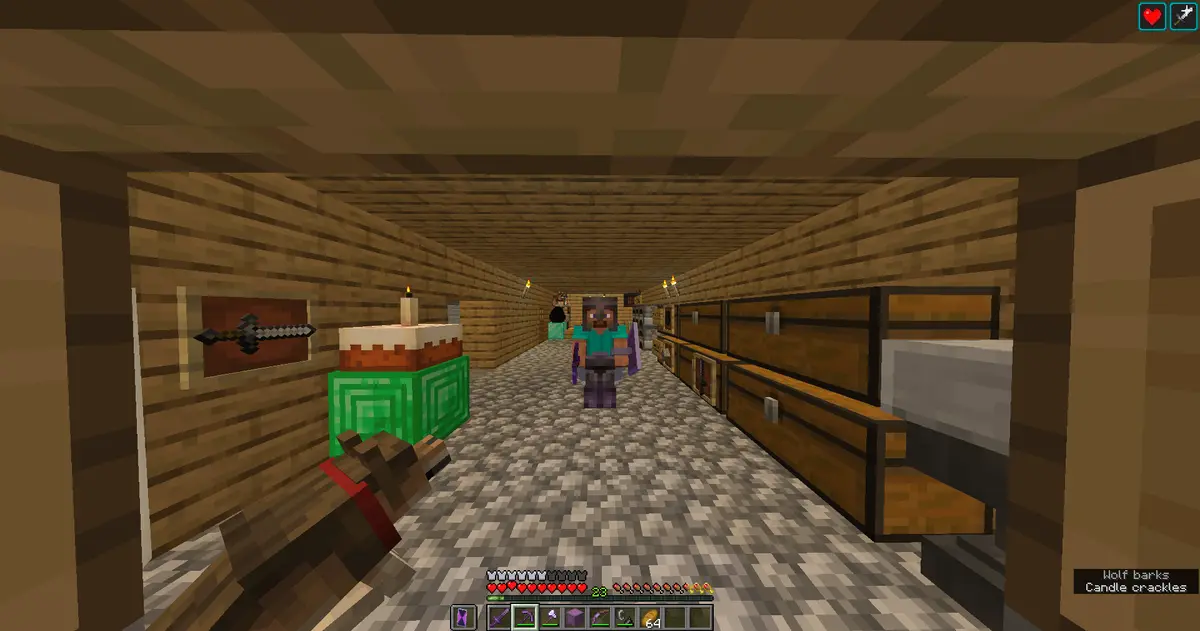
  • My Minecraft storage hall: a wooden corridor lined with chests, a cake on an emerald block, a framed sword, my wolf, and a friend in armour at the far end.
    ~/stuff/minecraft

    minecraft

    15,974hand somehow this eventually became a networking project.

    playing since June 2019Java Editionmostly vanilla

    been playing this for long enough that “playing minecraft” became “installing mods” became “making mods” became “why am i reading networking documentation for minecraft”.

    Nexus is partly the result.

    probably not the intended educational outcome of the game.
  • ~/stuff/maps

    maps

    i open maps more than any reasonable person probably should.

    sometimes OSINT. sometimes geopolitics. sometimes literally just looking at places.

    i have no better explanation.
  • D L' B D' F' D2 R2 F D F' R U2 D' F L2 B D2 B' U' R

    ~/stuff/cubing

    cubing

    newer obsession. a 3x3 is a remarkably efficient way to turn half a minute into several hours of trying to save another second.

    i don’t have a smart cube, which immediately made me wonder if i could analyse solves without one. for now it has a scrambler and a cube you can spin.

    pb
    23.89s
    avg
    26.23s
    cubes
    GAN 15MoYu WeiLong V10
    open the cube lab
  • ~/stuff/rabbit-holes/browser

    my browser

    a completely healthy number of tabs.

    current count: i stopped counting.
  • ~/stuff/games

    games

    games i keep coming back to. some because they are brilliant. some because physics engines are funny. some because apparently frustration is a hobby.

    • Undertale125h
    • BeamNG.drive850h
    • Geometry Dash1,100h
    • Buckshot Roulette65h
    • Sky: Children of the Light375h
    • Hydroneer260h
    • Counter-Strike 21,250h
    • Call of Duty: Modern Warfare III210h
    • Call of Duty: Black Ops Cold War320h
    • Garry's Mod900h
    • My Summer Car600h
    • My Winter Car120h
    • Kerbal Space Program575h
    • Sandboxels300h
    • Meccha Chameleon30h
  • ~/stuff/failed-projects

    abandoned things

    this folder is probably larger than the shipped projects.

    no. i will not be explaining this one.

say hi.

found something interesting, broken or worth building?

email is the easiest way to reach me.

built, broken and rebuilt by hamshamb.